

Last Updated:
Survivors often carry invisible wounds, like mental trauma, survivor’s guilt, PTSD, and deep psychological distress, say experts

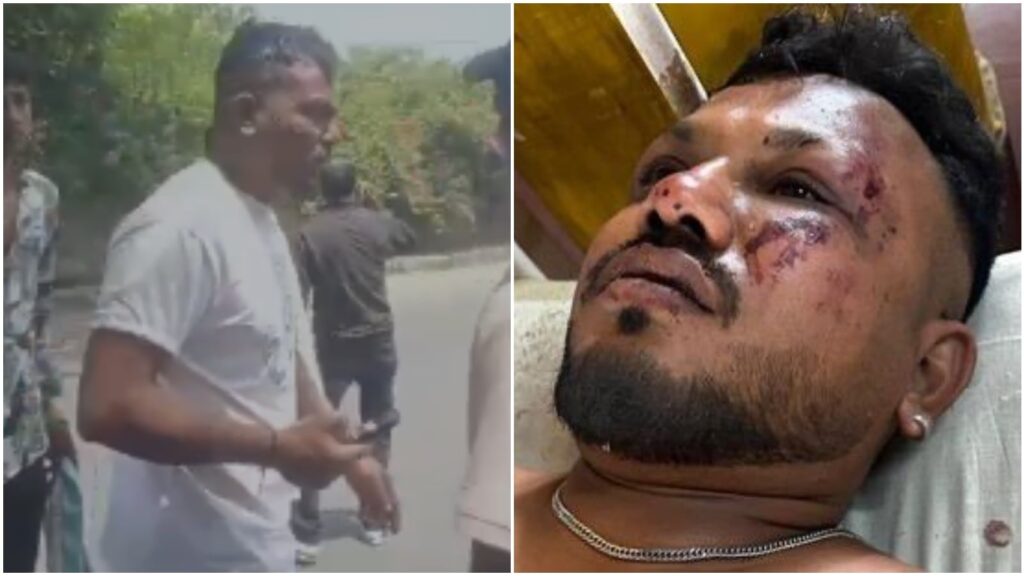
Footage taken shortly after the crash showed Ramesh limping towards an ambulance, covered in blood, but alive.
As the nation grapples with the tragic crash of an Air India flight near Ahmedabad on Thursday—an incident feared to have caused more than 260 casualties and left scores injured—trauma and emergency medicine experts say the first 24 hours after rescue could be the difference between life and death.
The Boeing 787 Dreamliner, bound for London, crashed shortly after take-off into a densely populated area near Meghani Nagar, triggering massive fires and a large-scale emergency response. While relief efforts continue, doctors say the survivors who make it to hospital care face a race against time. The sole survivor from the aircraft, Ramesh Viswashkumar, around 40 years old and a British national, was rescued from seat 11A and is currently undergoing treatment at Civil Hospital, Asarwa, according to Ahmedabad police commissioner GS Malik. Several people on the ground who were injured in the crash are also receiving care.
Primary treatment key, focus on ‘ABCDE’
“In cases of trauma of this kind, patients sustain multiple injuries. The initial hours are crucial, as primary treatment, including screening for all possible injuries like fractures, burns, head injuries, and their initial management, could save lives,” said Dr Ruchi Garg, head of emergency medicine and trauma at Yashoda Super Speciality Hospitals, Kaushambi. “Though survival is quite unlikely after such an unfortunate event, those who do survive can only be saved if they are provided proper primary treatment.”
Experts told News18 that hospitals dealing with mass-casualty incidents follow a structured trauma protocol. The protocol for trauma management includes management of the ABCDE sequence, which emphasises “Airway, Breathing, Circulation, Disability, and Exposure”.
“Taking care of these stabilises patients’ vitals and helps in recovery. Fluid resuscitation and ventilation are crucial in saving the lives of trauma patients,” said Dr Garg.
According to Dr Anandh Balasubramaniam, head of neurosurgery at Amrita Hospital, Faridabad, survivors of a plane crash typically present with a wide spectrum of injuries, ranging from blunt force trauma to fractures, spinal cord damage, traumatic brain injuries, and internal bleeding.
“Neurosurgical intervention may be urgently required in cases of skull fractures, brain haemorrhage, or spinal cord compression,” he said.
‘Invisible scars are hardest to treat’: Experts
Doctors emphasised that survival isn’t the only goal for these patients. Beyond physical trauma, experts pointed out the emotional fallout. “A mass disaster of this kind is a great mental trauma for witnesses of these incidents. So, mental counselling for post-traumatic stress disorder (PTSD) is an essential component of individuals’ well-being, along with physical health,” Dr Garg explained.
Similarly, Dr Balasubramaniam, who is also a trauma specialist, believes that healing after such an incident “isn’t just about mending bones and controlling bleeding”.
“Survivors often carry invisible wounds—mental trauma, survivor’s guilt, PTSD, and deep psychological distress. That is why psychiatric evaluation and counselling become a mandatory part of the post-crash recovery protocol,” he said.
Dr Balasubramaniam said trauma specialists usually activate a multidisciplinary response team, which includes psychologists, psychiatrists, grief counsellors, and social workers, along with the surgical and emergency teams.
“From a medical standpoint, it’s not just about survival; it’s about returning the individual to a life of dignity and functionality. Recovery, both physical and emotional, can take weeks or even years. We often say in trauma care, “The scars we don’t see are the hardest to treat—but they are just as critical.”
As Ahmedabad’s hospitals brace for one of the largest peacetime trauma responses in recent history, doctors on the front lines say what happens in the next few hours will shape not just survival, but the possibility of long-term healing.
“Plane crash victims, whether they are passengers or crew, deserve both immediate critical care and long-term psychological rehabilitation. Families, too, must be included in the healing process, because trauma doesn’t affect one person alone—it impacts entire support systems,” Dr Balasubramaniam advised.

Himani Chandna, Associate Editor at CNN News18, specialises in healthcare and pharmaceuticals. With firsthand insights into India’s COVID-19 battle, she brings a seasoned perspective.
She is particularly pass…Read More
Himani Chandna, Associate Editor at CNN News18, specialises in healthcare and pharmaceuticals. With firsthand insights into India’s COVID-19 battle, she brings a seasoned perspective.
She is particularly pass… Read More
- First Published:


